6:49 PM Wednesday, May 1, 2024
- There’s a possibility of rain on Thursday and Saturday, but Friday and Sunday are expected to remain largely dry.
- Expect cooler northeast winds with gusts up to 30 mph near Lake Superior on Thursday.
- Expect gusty southwest winds accompanied by milder temperatures on Friday, with highs reaching into the 60s.
- Expect high temperatures mainly in the 50s on Saturday and ranging from the 50s to 60s on Sunday.
Light rain is expected on Thursday for northeast Minnesota and northwest Wisconsin, while areas to the northwest and south may experience heavier rainfall with greater totals.
Expected rainfall in the Northland on Thursday ranges from approximately 0.05 inches to 0.45 inches. The southern regions of northwest Wisconsin, particularly around Siren and Hayward, may experience some of the higher totals in the area.

Rain is anticipated to move north/east across the Northland on Thursday, with precipitation ceasing from the southwest to northeast later in the day or into the night.
Note: Patchy fog is expected to form, particularly as the day progresses into Thursday evening.
NAM 3km model simulated radar forecast valid from 1 AM tonight to 7 AM Friday.

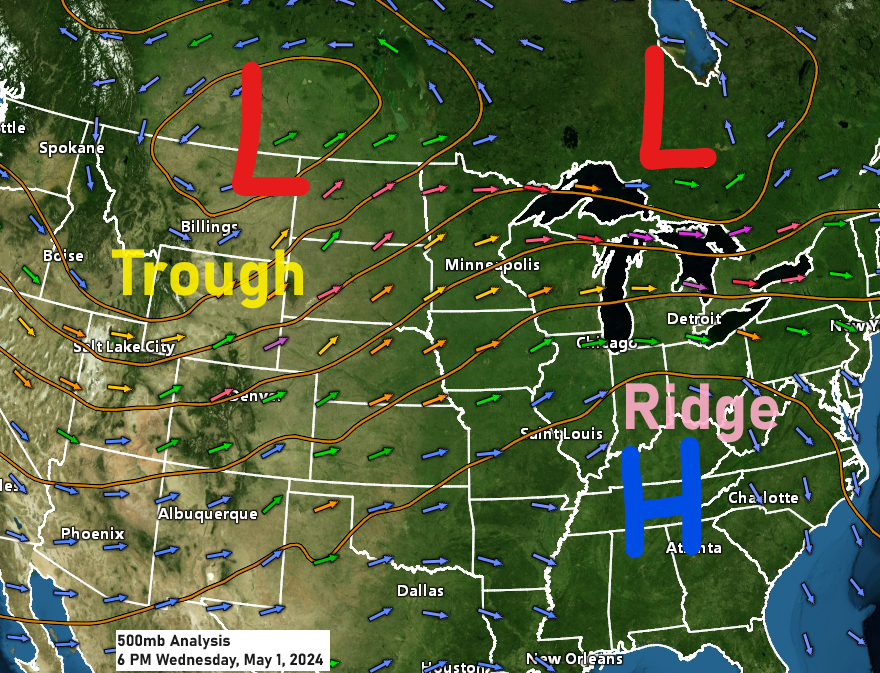
Today’s active weather pattern persists, with the system from last night that impacted the Northland now moving across eastern Canada. Meanwhile, the upcoming system is advancing north-eastward out of the Rockies.
GOES-16 water vapor loop concluded at 6:26 PM CT on Wednesday, May 1, 2024.

The forecast for next week indicates a deep and potentially slow-moving trough, along with an area of low pressure, expected to move northeast out of the Rockies. This system may bring additional rainfall to the Northland region, likely occurring early to mid-next week, around May 6-8.

Today, parts of the central and southern Plains are experiencing more severe thunderstorms.
Goes-16 sandwich satellite loop ending 6:31 PM CT, Wednesday, May 1, 2024.

Tornado and severe thunderstorm watches will remain in effect throughout the evening, extending from western and southern Kansas to western Texas.

Thanks for reading!
Tim
Leave a Reply